Cutting Concrete in a Building That Can't Shut Down
Inside a building that can't afford downtime, the schedule matters as much as the saw.
September 2, 2026 · 3 min read
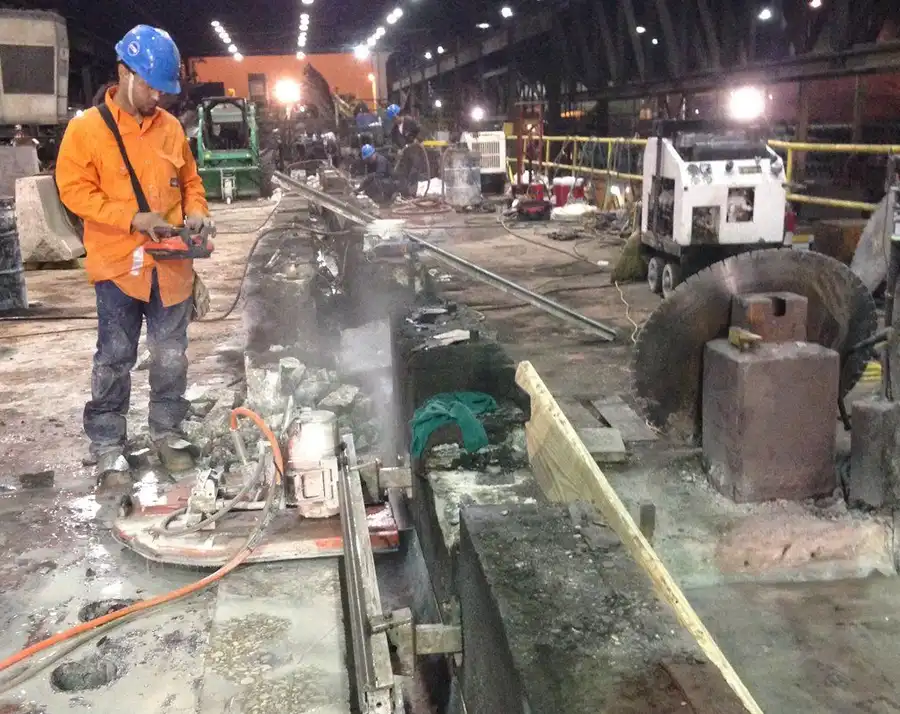
Some facilities can't just shut down for a concrete cutting or coring job. A hospital wing, a manufacturing plant running multiple shifts, or a retail space that's open to customers all have the same problem: the work has to happen around the operation, not in place of it. That changes how the job gets planned more than it changes what tools show up.
Off hours and overnight work
Belknap is available during off hours and offers 24-hour emergency service, which matters most on exactly this kind of job. Scheduling the cutting or coring for overnight, a weekend, or a planned production window lets the crew work while the floor is otherwise idle, instead of trying to fit around people and equipment that are actively in use. It's also the reason to flag a shutdown window as early as possible when the job gets scheduled, so it lines up with a stretch of time the facility can actually spare.
24-hour availability also covers the case nobody schedules for: a slab or a wall that has to be opened up right now because of a failed line or an emergency repair, not on a planned timeline. A facility that's already running lean on downtime doesn't have the luxury of waiting for the next open weekday slot when a plumbing or electrical failure needs concrete opened up to get at it. Having that option on the table changes how a facility manager plans for the kind of failure that can't wait.
Dust and water control matter more indoors
Cutting indoors, especially in an occupied or partially occupied building, puts dust control on the list of things that matter as much as the cut itself. Wet cutting, running water at the blade or the wire while it works, is the standard way to keep dust down during an indoor job, and it's part of why the equipment and the approach get chosen with the site in mind rather than picked the same way every time. A cut made the same way outdoors on an open lot would be handled differently inside a building where the dust has somewhere to settle.
Sequencing around what can't move
In a working plant, there's usually equipment, inventory, or fixtures near the cut that can't simply be relocated for the day. That's where sequencing matters: breaking the job into phases so one section gets cut and cleared while operations resume around it, rather than treating the whole footprint as off-limits until everything is finished. It takes more coordination up front, but it means the facility isn't losing more operating time than the specific section actually being cut requires.
Coordinating with the trades already on-site
A shutdown window rarely belongs to just one crew. Electricians, plumbers, or an equipment installer are often working the same footprint, sometimes waiting on the concrete opening before their own part of the job can start. Sharing the cutting schedule with whoever else is on-site, not just the general timeline but the actual order the sections will be cut in, keeps everyone moving instead of standing around waiting on an opening that hasn't been cut yet. It's a small coordination step that has an outsized effect on how much gets done inside a limited window.
The same applies to whoever is running the shutdown from the facility side. A single point of contact who can approve a change on the spot, whether that's extending a section by a few feet or adjusting the sequence because something didn't come apart the way the drawings suggested, keeps small decisions from turning into delays. Concrete doesn't always match the plans exactly, especially in an older building, and having someone with the authority to make a call in the moment is worth more than a longer meeting beforehand.
- Define the exact footprint being cut, not a general area, so nothing outside it is disrupted
- Mark cut lines or core points ahead of the crew's arrival so no time gets spent figuring out where to cut
- Confirm power ahead of time: Belknap runs 480 volt, diesel, and gas equipment, and brings generators when the facility can't power the 480 volt equipment
- Keep one point of contact reachable for the duration of the window, in case sequencing needs to shift
Belknap Concrete Cutting and Drilling has worked commercial jobs around Houston since 2003, family owned and operated and bonded and insured, and takes on the kind of scheduling a working facility actually needs rather than a fixed nine-to-five slot. For a building that can't afford to stop, the plan matters as much as the saw.
Belknap Concrete Cutting and Drilling — (281) 955-6812
Call (281) 955-6812More articles
What to Have Ready Before a Concrete Cutting Crew Arrives at Your Facility
A little preparation before the saws show up turns a half-day of confusion into a job that starts on time and finishes clean.
Wire Sawing, Wall Sawing, Slab Sawing, or Hand Sawing: How the Method Gets Chosen
The four cutting methods solve different problems, and matching the right one to the job is what keeps a cut clean the first time.