Wire Sawing, Wall Sawing, Slab Sawing, or Hand Sawing: How the Method Gets Chosen
The four cutting methods solve different problems, and matching the right one to the job is what keeps a cut clean the first time.
September 2, 2026 · 4 min read
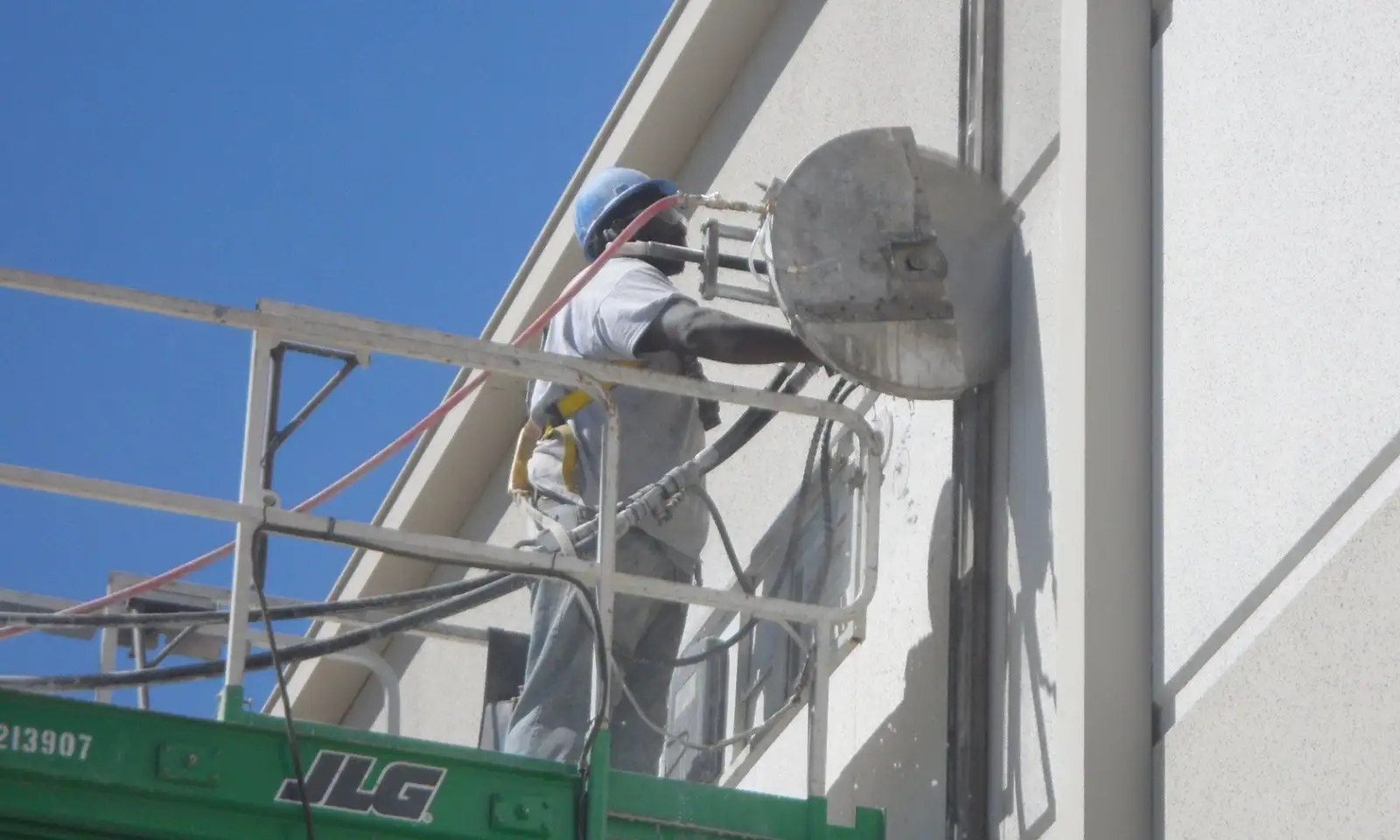
Four different names get used for concrete cutting, and they aren't interchangeable. Slab sawing, wall sawing, wire sawing, and hand sawing each solve a different problem, and the method a crew picks affects the schedule, how much of the surrounding structure gets disturbed, and in some cases how much material gets wasted in the process. None of it is arbitrary. It comes down to where the cut has to go and what it's cutting through.
Slab sawing: the horizontal cut
Slab sawing is the flat, horizontal cut, used on floors, driveways, and pavement, on both residential and commercial jobs. Belknap runs gasoline, diesel, or electric equipment for it depending on the site, and it covers everything from cutting a clean opening in a new floor to sawing out a damaged section for a slab repair. When the goal is a straight, controlled line across a horizontal surface, this is usually the starting point.
Wall sawing: vertical and overhead cuts
Wall sawing uses a track-mounted saw to cut vertical or overhead concrete, and the track is the whole point. It holds the blade on a fixed, controlled line so an opening comes out square instead of ragged, and the surrounding wall doesn't take the kind of stress that breaking it out with a hammer would put on it. It's the method behind a warehouse expansion, a new door placement, an addition to an auto body shop, or any new window or door opening cut into an existing wall.
Wire sawing: for the cuts nothing else can make
Wire sawing is the specialty option, used for large cuts, hard to reach areas, and jobs on both commercial and residential sites where a track saw or a hand saw won't do the job. Belknap describes the method plainly: a diamond wire is threaded through a series of pulleys attached to a drive wheel, and a constant pulling force is applied to the spinning wire to cut through the concrete. Because the wire itself is thin, it removes far less material with every pass than a blade does, what's called a smaller kerf. On a thick or heavily reinforced section, that difference in wasted material can run into the hundreds or thousands of dollars, which is a big part of why wire sawing gets specified on jobs where the size or the reinforcement rules out a standard saw.
Hand sawing: when nothing else fits
Some cuts have to happen somewhere a track-mounted saw simply can't reach: tight corners, low clearance, equipment that can't be moved. That's where hand sawing comes in, using ring saws, chainsaws, hydraulic saws, and gas or electric powered hand saws depending on the access and the material. It trades some speed for the ability to get into a spot a bigger machine can't, which matters more than speed when the alternative is not being able to make the cut at all.
Why one job sometimes uses more than one method
It's common for a single project to call for more than one technique. A warehouse expansion might need wall sawing to open the new door and window openings, slab sawing to tie the new floor into the old one, and hand sawing to finish a corner the track saw couldn't reach. Each method is a tool suited to a specific part of the job, not a single approach a crew commits to before they've seen the site. That's also why the equipment listed for slab sawing includes both gasoline or diesel run machines and electric equipment: the choice depends on whether the job is outdoors with room for exhaust, or indoors where a quieter, cleaner power source matters more.
Reinforcement is the other variable that decides the method as much as location does. A thin residential slab with light mesh cuts easily with standard equipment. A heavily reinforced commercial floor, or a wall thick enough to need cutting from both sides, is where the extra planning that goes into wire sawing starts to pay for itself. Asking upfront what the concrete is reinforced with, and how thick it runs, is usually enough for an experienced crew to know which saw belongs on the truck before they ever see the site in person.
- Orientation of the cut: flat and horizontal favors slab sawing, vertical or overhead favors wall sawing
- Access: a track saw needs room to set up; tight corners or low clearance point toward hand sawing
- Size and reinforcement: large or heavily reinforced sections are where wire sawing gets considered
- How much the waste matters: wire sawing's smaller kerf saves material on the jobs where that adds up
- Indoors or out: the power source, gas, diesel, or electric, gets picked partly around ventilation and noise
Belknap Concrete Cutting and Drilling has worked commercial and residential concrete cutting jobs around Houston since 2003, family owned and operated and bonded and insured. Matching the method to the cut, rather than showing up with one saw and making it work, is a big part of why a job comes out clean the first time instead of needing a second pass.
Belknap Concrete Cutting and Drilling — (281) 955-6812
Call (281) 955-6812More articles
What to Have Ready Before a Concrete Cutting Crew Arrives at Your Facility
A little preparation before the saws show up turns a half-day of confusion into a job that starts on time and finishes clean.
What Core Drilling Actually Does to a Home Concrete Slab
A round, controlled hole instead of a broken slab, and what it usually gets used for around a Houston home.