A straight line, standing or flat: track saws
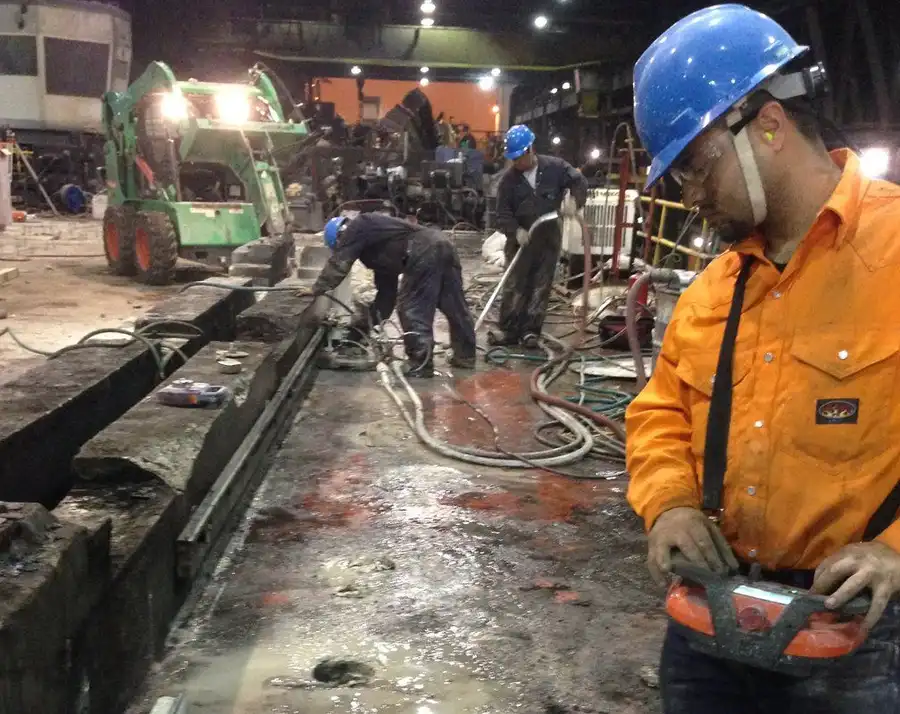
A wall saw runs on a rail bolted to the wall itself, so it holds a square line through a standing wall that's still carrying load, this is how we open a warehouse expansion, a new door placement, or an auto body shop addition. Slab sawing is the same idea flat on the ground, on floors and pavements, residential or commercial.
Too large or too awkward for a blade: wire
Wire sawing goes to work where a blade can't reach around the section or the job is simply too large for one. A diamond wire threaded through pulleys on a drive wheel pulls through the concrete, and it leaves less kerf and less wasted material behind, which is often the reason it's chosen even when a blade would technically fit.
Nowhere for a machine to sit: hand sawing
Ring saw, chainsaw, hydraulic saw, gas and electric hand saws. This is what comes out when access is tight or standard cutting equipment can't physically get to the cut, it takes more from the technician, so it's picked when nothing else will fit, not as a first resort.
A round opening, not a cut line: core drilling
Plumbing lines, electrical runs, fire protection, anchor bolts, bollards, handrails, HVAC penetrations and concrete testing all want a clean round penetration rather than a straight line, the safest and most economical way to route a line or make room for new machinery in a shop or plant.
The concrete is leaving entirely: breaking and removal
When nothing needs to stay clean and square, we break with hydro-hammers, excavators and skid steers running hydraulic breakers, then load out with dump trucks and roll-off containers. We believe the job isn't complete until we've picked up the pieces.
Something new is going in: concrete construction
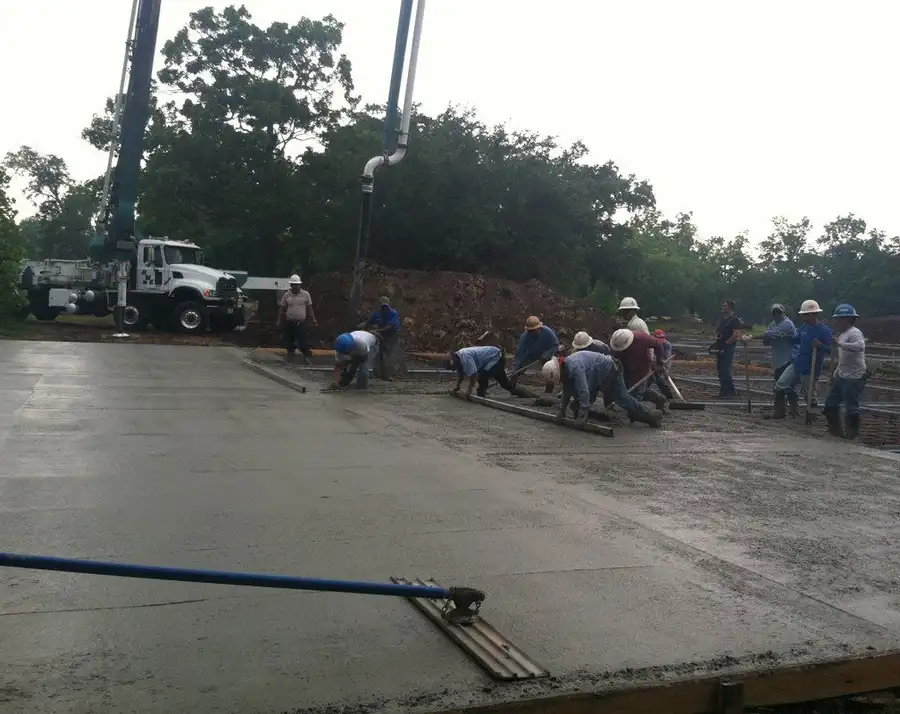
New construction foundations, paving, sidewalks, ADA-compliant ramps, truck and dock ramps, machine pits, driveways, and plumbing and electrical trench pour back, worked from your own plans and blueprints where you have them.
None of this changes if your building has no spare power for the saw. We run 480-volt, diesel and gas equipment, and we can supply generators to complete a task if your facility can't power the 480-volt gear. Combined with 24-hour emergency service and off-hours availability, that's usually what decides whether a cut happens this weekend or gets pushed to next quarter.